
Back to the overview
In the RIVM report (link) simulated nature is defined as the “subjective experience of something as nature,” including nature photos, images and nature films. This form of nature experience is especially valuable where physical nature is difficult to implement, such as in closed treatment rooms or waiting rooms. Images of nature bring the same aesthetic benefits as real nature, but without the logistical challenges of maintenance or physical space.
The effect of simulated nature is supported by scientific research. The report refers to several studies showing that images and artworks with nature themes contribute to stress reduction, higher satisfaction and an overall sense of well-being. This makes simulated nature a practical and efficient solution for many healthcare institutions.
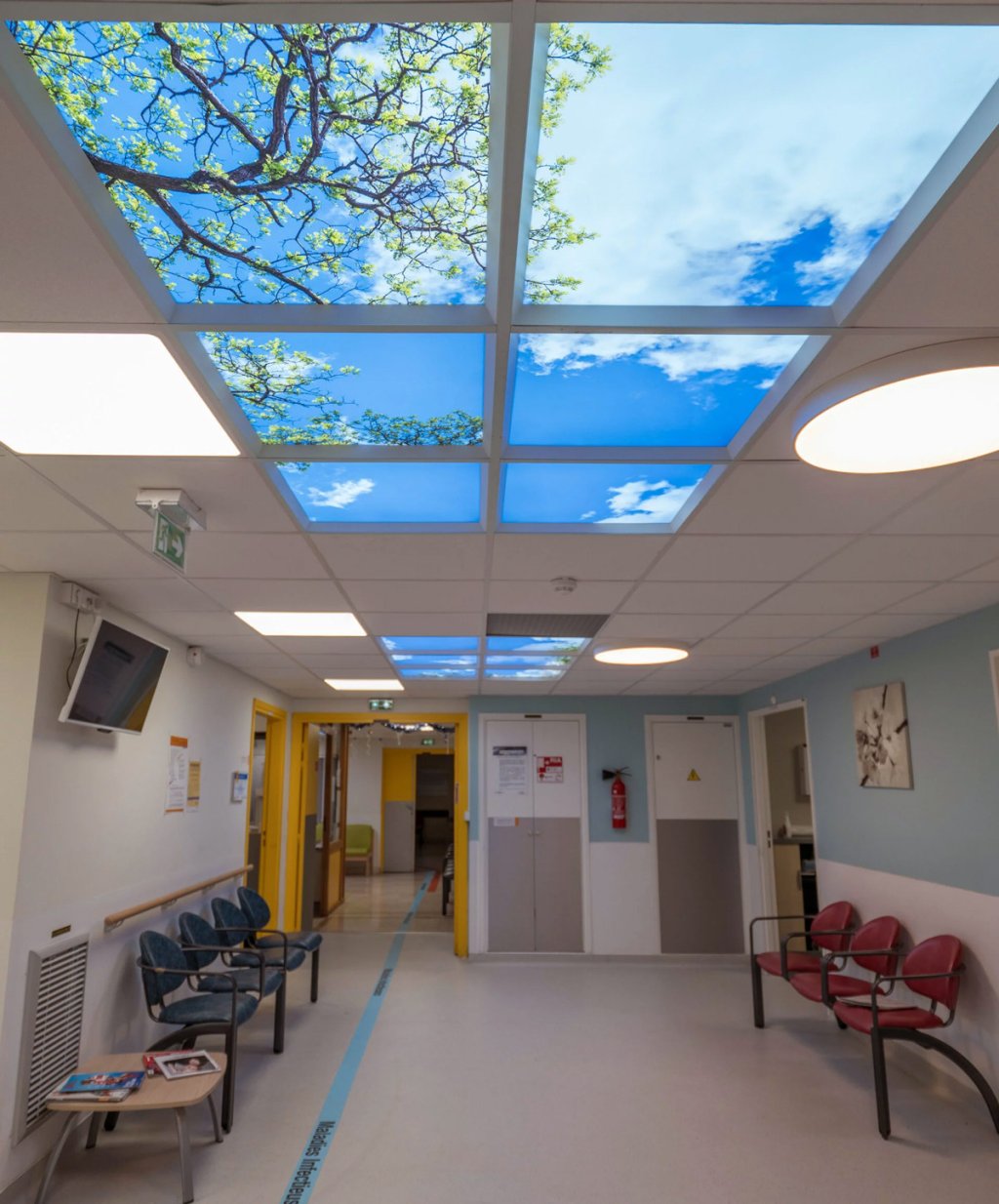
The report offers insight into how nature can affect different groups in healthcare:
For patients:
- The report describes that simulated nature, such as posters and images of plants, has a positive effect on stress levels and patient satisfaction.
- It also refers to studies showing that nature photos in waiting rooms contribute to a calmer environment and help patients feel more at ease.
For staff:
- The report notes that staff benefit from green environments, especially in rest areas, which contributes to mental resilience.
- It emphasizes that the aesthetic value of natural elements contributes to a more attractive workplace, which is positive for how staff experience their work.
Simulated nature can be integrated into the design of healthcare institutions in several ways. Naturally, the link to our applications is easy to make.
Sky ceilings and light installations: Innovations such as the LED undefined by OpenCeilings can imitate the feeling of the outdoors, contributing to a lighter, more natural and more open sense of space.
Wall images and OpenWindows: Nature photos on the walls of waiting areas or treatment rooms can reduce tension and improve the overall experience of the space. Our OpenWindows virtual windows explicitly build on this by simulating the feeling of looking out of a window.
Dynamic Daylight: Our DynamicDaylight LED panels automatically adjust light color and intensity to the time of day. They could thereby offer a positive application of simulated nature in healthcare environments. The combination of biodynamic LED lighting with our natural, razor-sharp photo panels supports the natural biorhythm of people in the space.
The use of simulated nature, such as LED sky ceilings, nature photos and Dynamic Daylight technology, offers healthcare institutions a valuable opportunity to create environments that promote the well-being of patients, staff and visitors. The literature shows that nature – both physical and simulated – can have positive effects on stress reduction, recovery and overall satisfaction. Innovations such as those from OpenCeilings fit in seamlessly and make it possible to make the healing power of nature accessible and practical in a wide range of healthcare settings.
Although there are strong indications that nature interventions are beneficial, it remains a challenge to determine the exact effects and working mechanisms of these interventions. As the report "Green Deal Sustainable Care" emphasizes, further research is needed into the specific influence of different forms of nature. Which plants, types of images or sounds are most effective? And how does this vary by target group and context? These are some of the questions that remain unanswered for now. We therefore continue to explore these very interesting studies and articles. For us it is beyond doubt that our applications add value in every healthcare environment.
If you are interested after reading this article in experiencing our daylight solution and quality, request the free demo case below.