
Back to the overview
Light does far more than help us see. Through special light sensitive cells in the eye, it sets our body clock, the internal rhythm that decides when we feel alert and when we start to flag. In summer we pick up plenty of bright daylight without trying. In the winter months that natural dose largely disappears, and office lighting suddenly becomes the main source of light in the working day.
You notice it. An afternoon slump that refuses to lift, trouble focusing and the feeling that the day never quite gets going are all familiar signs. Traditional office lighting is usually designed with a single goal: enough lux on the desk. That is fine for reading a report. Our biological rhythm, however, needs variation in brightness and colour temperature, just as it gets outdoors.
The link between light and the way we work is well researched. In a British study in a call centre, one floor was fitted with much cooler, blue enriched lighting while another floor kept its existing lights. After three months, staff under the new lighting reported clearly better concentration, more vitality and less fatigue. The researchers are open about the limitations, such as the small sample. Even so, almost everyone wanted to keep the new lights.
Daylight and views play their part too. Research among office workers found that people with windows at their workplace received more light during the day, slept longer and scored higher on vitality than colleagues in windowless rooms. Daylight in the workplace is not simply pleasant; its effect carries on into the night. The connection between lighting and productivity starts long before anyone sits down at their desk.
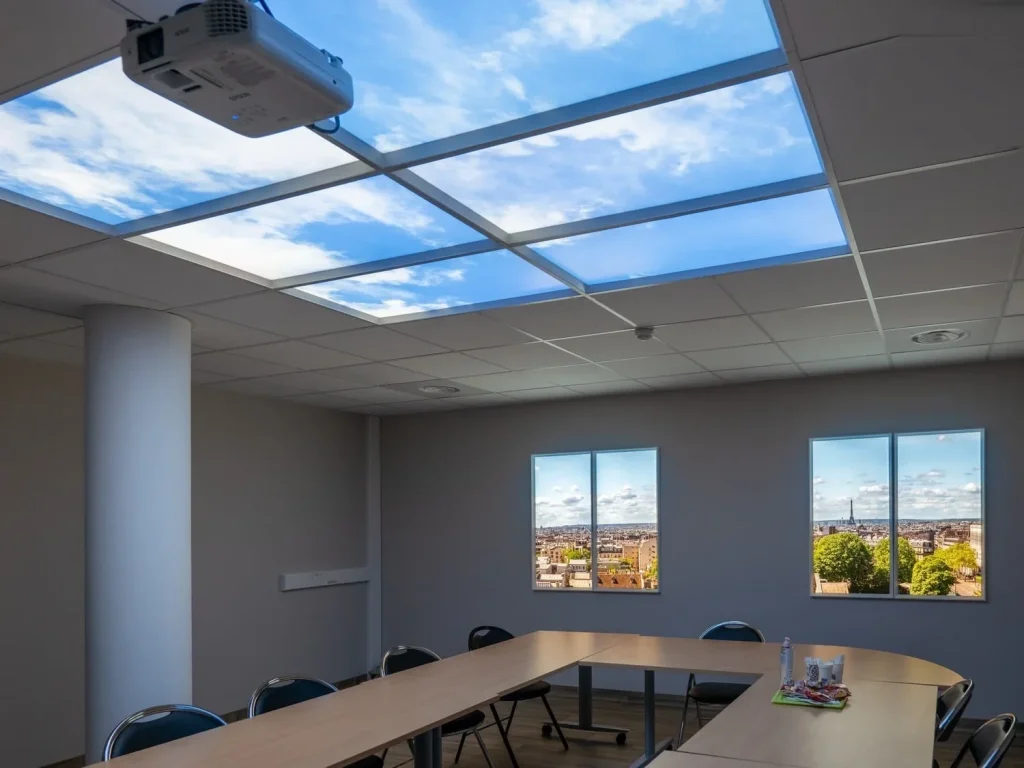
The lesson from this research is clear. Healthy office lighting follows the course of the day. That is exactly the idea behind our biodynamic lighting, DynamicDaylight. Colour temperature shifts automatically from a warm 2700K to a fresh 6500K and back again, while intensity changes with it. In the morning and around midday, cool, bright light supports alertness. Towards the end of the afternoon the light becomes softer and warmer, helping the body prepare for the evening.
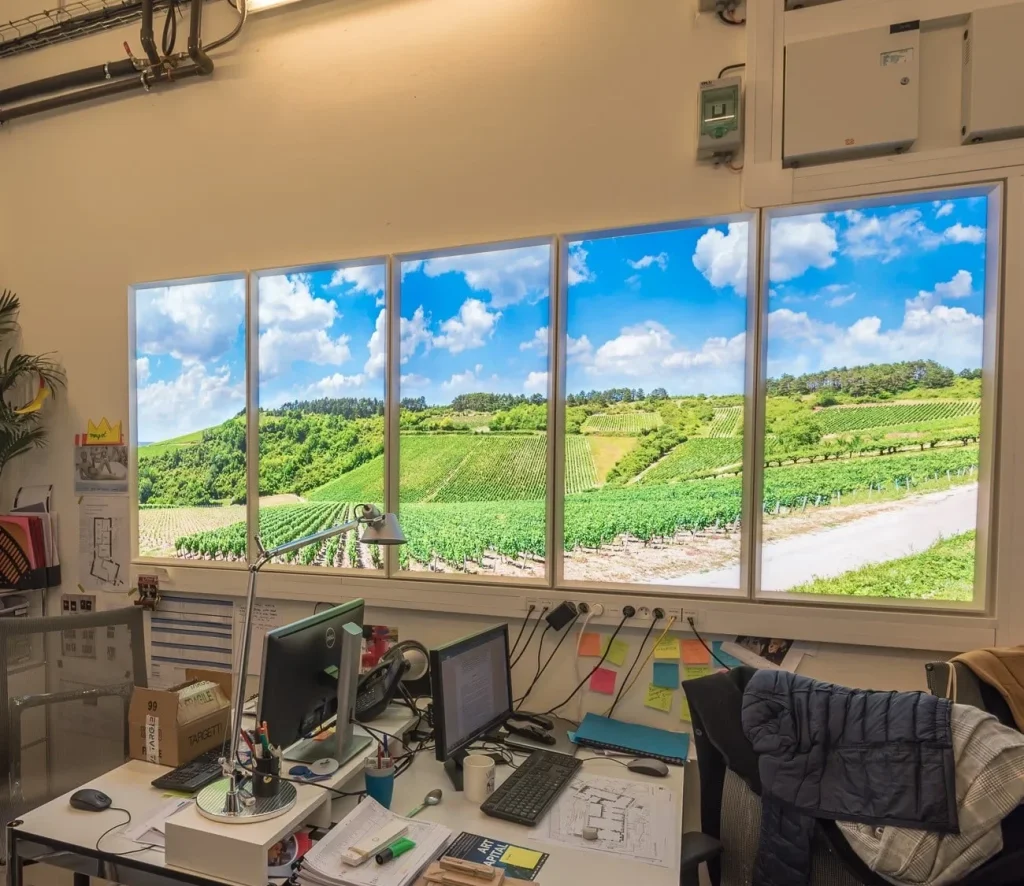
What people see matters as well. An office without a view can feel closed in during winter. A sky ceiling with realistic cloud photography or an OpenWindows virtual window brings a piece of sky or landscape back into the room. This fits neatly with biophilic design, the approach that deliberately reconnects people with nature, and the difference in how a space feels is often immediate.
Upgrading your office lighting does not have to mean a refit. Our panels fit a standard suspended ceiling and install on a plug and play basis. DynamicDaylight runs on a Bluetooth mesh network without Wi-Fi and is controlled by a wireless, battery free switch or the free Casambi app. The LED technology is energy efficient, long lasting and needs very little maintenance, so better lighting supports your sustainability goals too.
The dark months simply make visible what is true all year: light shapes how we feel and how well we concentrate. Organisations that tune their office lighting to the natural rhythm of the day, and add a touch of nature, are investing in wellbeing and job satisfaction alike. As a pioneer in simulated nature, OpenCeilings has spent years helping organisations make indoor spaces brighter and more alive.
Curious what that could look like in your building? Discover what DynamicDaylight biodynamic lighting can do for your office, or request our demo case and experience the difference at your own desk.
The European standard EN 12464-1 recommends an illuminance of 500 lux on the work surface for desk work. That is a minimum for good visibility. For wellbeing and alertness, variation in light across the day matters as well.
There is no single ideal value. Cooler light of around 5000K to 6500K supports alertness during the day, while warmer light of around 2700K to 3000K feels calmer later on. Dynamic lighting combines the best of both.
Yes. Our panels are designed for common suspended ceiling grids and are installed plug and play. In most offices no major building work is required.