
Back to the overview
A control room is the nerve center of every organization that has to be operational 24 hours a day. Whether it concerns energy, transport, safety or industry: the operators in these rooms carry an enormous responsibility. Yet lighting in the control room is still too often treated as an afterthought. That is a missed opportunity, because Human Centric Lighting has a direct influence on alertness, brain function and the well-being of everyone who works there.
The problem: control rooms are naturally without light
Most control rooms have few or no windows. This is designed that way on purpose: direct sunlight causes screen reflections and makes it harder to read video walls and monitors properly. The consequence, however, is that operators spend their entire shift in an environment that is completely dependent on artificial light, without any connection to the natural day-night rhythm outside.
That has concrete consequences. Research published in the Journal of Circadian Rhythms shows that shift work leads to disrupted sleep quality, reduced concentration and a higher chance of errors, especially at the end of a long night shift. A room that burns at the same light intensity and color temperature all day gives the body no signal whatsoever to stay alert or, conversely, to wind down.
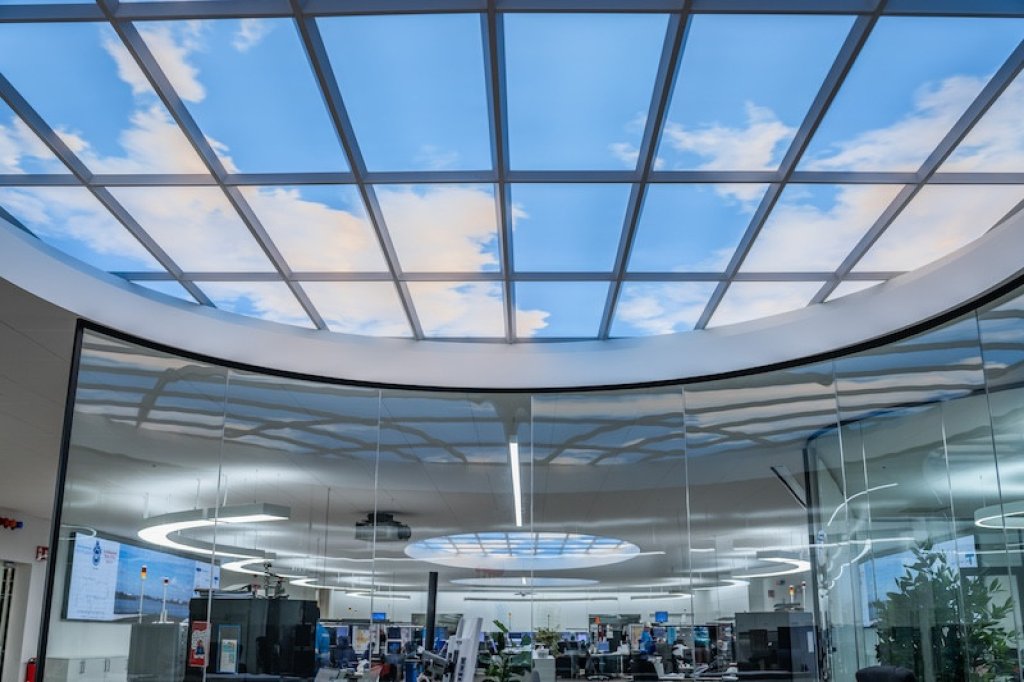
Our body is tuned to the rhythm of the sun. In the morning, bright, bluish light provides activation; at the end of the day, warm, amber light gives the signal to relax. This is the circadian rhythm, also known as the biorhythm, and it controls processes such as alertness, melatonin production and cognitive performance.
In a control room where fixed artificial lighting is on, this rhythm is disrupted. Operators who work night shifts are confronted with light that does not match their biological clock, which accelerates fatigue and loss of concentration. Scientific research shows that daylight simulation in the workplace, where light color and intensity move along with the time of day, significantly improves the alertness of night shift workers and positively influences sleep quality after the shift.
A well-thought-out lighting plan for a control room combines three types of light that complement each other.
The first is ambient lighting: a diffuse, indirect base level of light that illuminates the room evenly without screen reflections or harsh shadows. The second is task lighting: focused lighting at specific workstations for reading documents or operating equipment. The third, and most innovative, is Human Centric Lighting: lighting that imitates the course of the day and thereby actively supports the biorhythm of operators. This third type is still far from standard in control rooms, while the scientific evidence is getting stronger.
This is where biodynamic lighting has a clear role. Our DynamicDaylight LED panels automatically adjust light color and light intensity throughout the day. In the early morning the panel emits a fresh, bright light that activates the body. During the day the light level stays high with a neutral white tone that promotes concentration. At the end of the day the color temperature shifts to a warmer spectrum, so that the body is prepared for rest after the shift.
This is especially valuable for operators who work rotating shifts. By equipping the room with lighting solutions that work without daylight yet still match the biological clock, you reduce the circadian disruption that is so characteristic of shift work. The panels are silent, flicker-free and energy-efficient, which also makes them a logical technical choice for environments where lighting is on 24 hours a day.
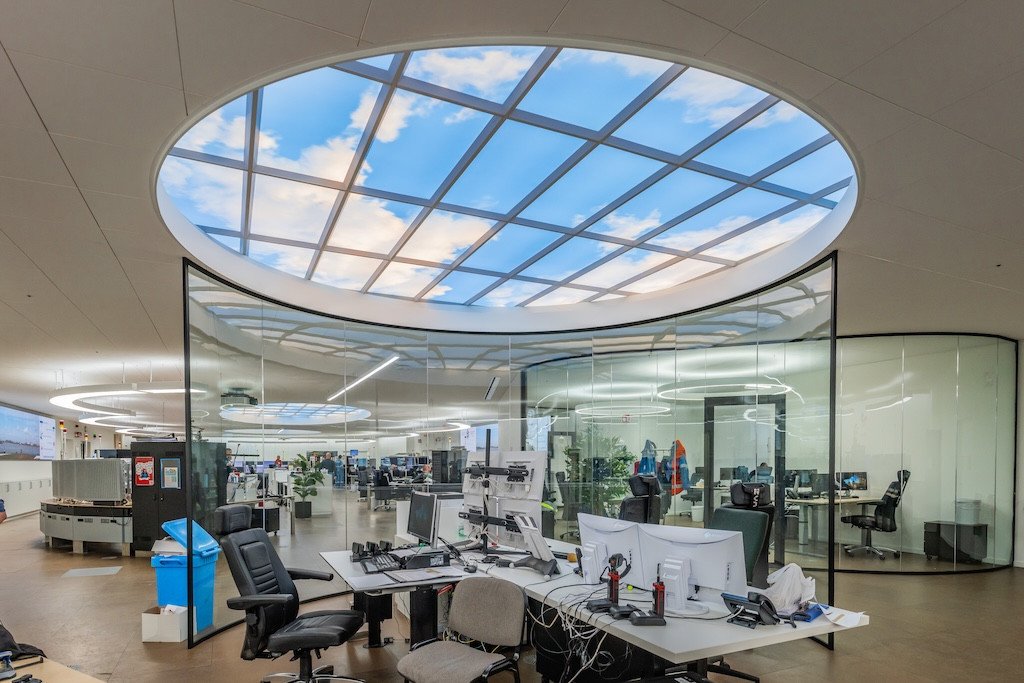
Besides light color and intensity, the visual environment also plays a role in a healthy workplace. A control room often consists of monitors, dark walls and a ceiling with standard fixtures. There is no view, no nature, no sense of space. Research into biophilic design shows that even seeing nature images contributes to stress reduction and a lower feeling of mental fatigue.
Our LED sky ceilings offer a smart addition to Human Centric Lighting here. By replacing a few standard suspended ceiling tiles with illuminated photo panels with a razor-sharp image of a cloudy sky, you create a visual focal point in the room. Operators who glance up do not see a gray ceiling but a lifelike view of the open sky. This reduces the closed, oppressive atmosphere that many control rooms have, without compromising the functionality of the room.
The panels are plug-and-play and fit in any standard suspended ceiling. They do not have to be part of the entire ceiling; even a few strategically placed panels make a visible difference. And because the photo panels are interchangeable, you can adapt the atmosphere over time.
A specific challenge in control rooms is screen glare: reflections of light sources on monitors. This reduces legibility and forces operators to sit differently, which in the long run causes neck and back complaints. The DynamicDaylight panels from OpenCeilings have a completely even light output thanks to edge-lit LED technology, so there are no bright light sources visible that can reflect. Combined with a well-thought-out placement in the ceiling, this forms a Human Centric Lighting solution that minimizes screen reflections without compromising on the experience.
A commonly heard objection to improving control room lighting is the fear of disruption during implementation. Control rooms are critical environments that can rarely or never be shut down. Our photo ceilings and DynamicDaylight panels are designed for quick installation. No major changes to the structure are needed and the installation can be carried out in phases.
A control room that keeps operators sharp, healthy and focused day and night starts with the lighting. Human Centric Lighting supports the circadian rhythm, reduces fatigue and lowers the risk of errors. Combined with a visually calming sky ceiling, you create a healthy workplace that is not only functional, but also contributes to the well-being of everyone who works there.
Want to discover what biodynamic lighting and a sky ceiling can mean for your control room or other professional work environment? Get in touch via our contact page or request the free demo case. You will then experience for yourself the difference the right lighting makes.
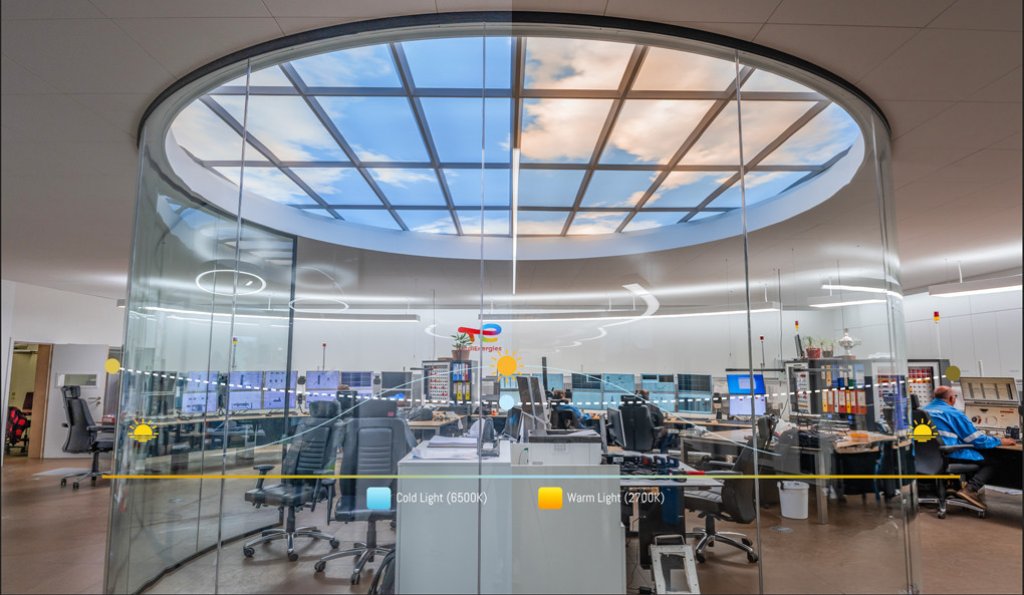
Human Centric Lighting (HCL) is lighting that is tuned to the human biorhythm. The light color and intensity change automatically throughout the day, just like natural daylight. In a control room, where operators often work without daylight and in shifts, HCL helps to support the biological clock, reduce fatigue and keep concentration up.
Operators on shift work experience disruption of their circadian rhythm because they work at changing times. Daylight simulation in the workplace, through biodynamic LED panels, gives the body the right light stimuli at the right moment. This improves alertness during the shift and sleep quality afterwards, which directly contributes to safety and performance.
Yes, and that is precisely the strength of the OpenCeilings solution. The DynamicDaylight panels provide the biodynamic lighting, while illuminated photo panels with a cloudy sky add a visual focal point to the room. Both applications reinforce each other and can be installed plug-and-play in any standard suspended ceiling.