
Back to the overview
Imagine: you are lying in a hospital bed, tense before a treatment. You stare up at a white, bare ceiling. The lighting is a harsh, bluish light. Out of your line of sight machines hum. This is the reality in many healthcare environments, and it is exactly the reality that the concept of the healing environment wants to break.
A healing environment assumes that the physical space in which someone stays has a direct influence on their well-being, speed of recovery and experience of care. Not as an afterthought, but as part of the treatment itself.
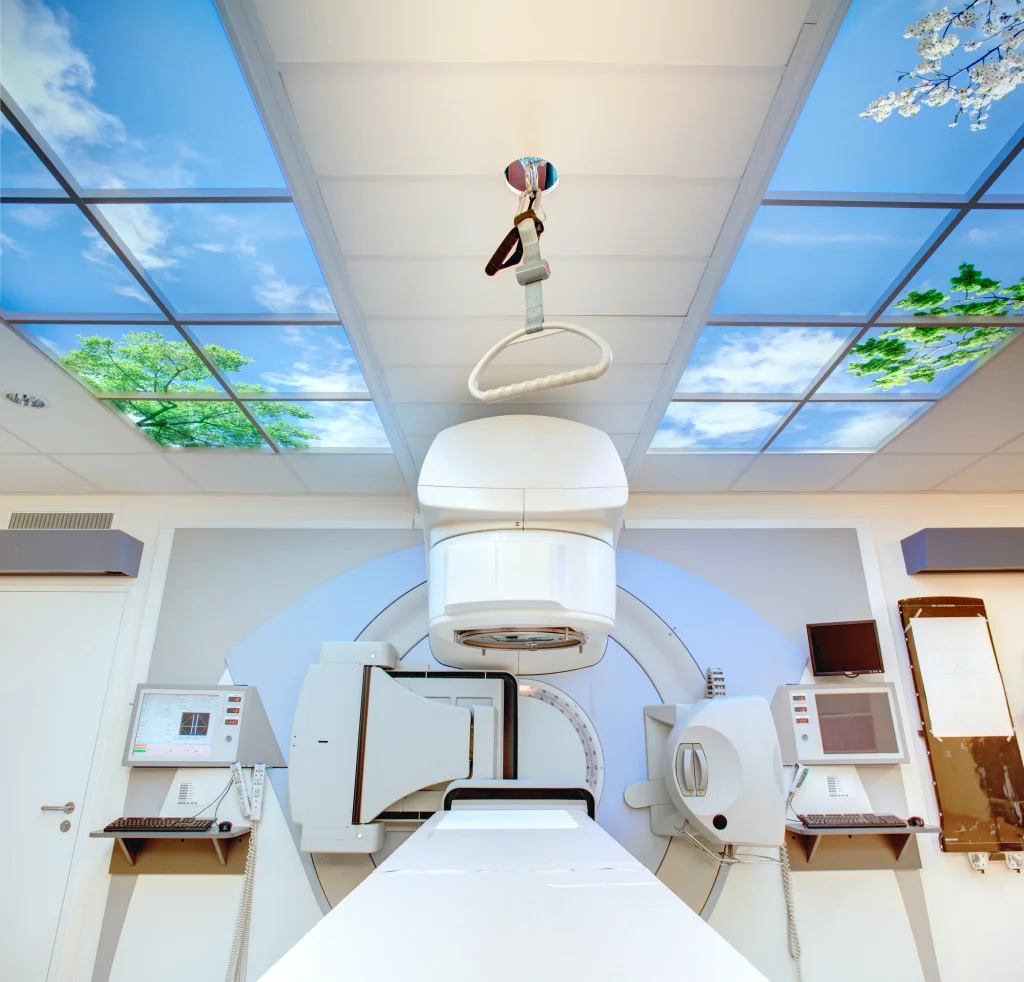
The concept of the healing environment arose in the 1980s and 1990s, as a reaction to the cold, impersonal atmosphere that many hospitals radiated. The idea behind the principle is that a hospital is furnished and made more humane, which benefits the healing process of the people in the hospital. Technicare
In practice this means that environmental factors such as light, sound, color, privacy and the presence of nature are deliberately used in the design of healthcare environments. Daylight, a view of nature, fresh air, privacy, silence, art and a homely atmosphere can create a healing environment. Weliswaar
Important to understand: a healing environment is not a single standard. A healing environment is a place designed with attention to the personal circumstances of patients or residents. The space must respond to the needs of the people who stay there. That calls for customization, and smart choices in the interior. Weliswaar
The most cited research in this area dates from Roger Ulrich in 1984. Patients with a view of nature used a lower dose of painkillers and were able to leave the hospital sooner than patients who looked out on a brick wall. This sounds simple, but the implications are large: even passive, visual contact with nature has measurable effects on the body. (Classic study by Ulrich (1984)).
What is remarkable: you do not necessarily have to look outside for this. You do not even have to physically stand in a forest; a photo of a tree can already be enough. Scientific research shows that within twenty seconds, viewing nature images can have demonstrable stress-reducing effects on the cardiovascular system.
Daylight plays a complementary role. Eighty percent of what we interpret from our environment comes through what we see, and that is strongly influenced by the available light. Lighting design in healthcare environments is an important factor in creating healing situations. Wikipedia
Three elements are decisive when designing a healing environment.
Light regulates our biorhythm, our alertness and our sleep pattern. In healthcare environments where patients and staff have little access to daylight, this has direct consequences for their well-being. Biodynamic lighting, also called human centric lighting, imitates the course of daylight: fresh and bluish in the morning, bright white in the afternoon, warm and amber in the evening. This supports the circadian rhythm of both patients and employees, even in rooms without windows.
Our DynamicDaylight panels are specially developed for this kind of application. They automatically adjust light color and intensity to the time of day, without the need for drastic changes to the building.
Not every hospital has the luxury of large windows overlooking a park. Yet this is one of the most effective interventions within a healing environment. Illuminated photo panels offer a directly applicable solution here. Our LED sky ceiling gives spaces without a daylight opening an open, airy character. Patients who look at the ceiling do not see white tiles, but a lifelike cloudy sky with soft daylight simulation.
For wall and window applications, our OpenWindows virtual windows offer a virtual view: of a quiet forest, a beach, or an open meadow. They are easily mounted, comparable to hanging a painting, and can be swapped as the design requires.
A healing environment in a hospital means that you take the patient seriously. It is important to give people a choice. Fresh air and space: give people what they need. This translates into waiting rooms that do not feel stuffy, treatment rooms that are not clinical and bare, and corridors that invite rather than intimidate. Ecophon
A healing environment is not only important for patients. Healthcare staff often spend hours on end in interior spaces without any access to daylight or nature. This affects concentration, motivation and well-being. A work environment that integrates biophilic design principles demonstrably contributes to job satisfaction and reduces absenteeism.
By also applying photo ceilings and biodynamic lighting in staff rooms, emergency corridors and operating preparation rooms, you invest in the people who provide the care. You can find more information about our applications in healthcare on our healthcare page.
A common hurdle for healthcare institutions is the idea that a healing environment requires large-scale renovations. That does not have to be the case. Our panels fit in any standard suspended ceiling with a 60x60 or 120x60 grid and can be installed plug-and-play. No building permit is needed, no dust, no lengthy closure of rooms.
Looking practically at how you design a space according to the healing environment principle means there are a few starting points you can take into account, with enormous possibilities in the execution. It is precisely this flexibility that makes our solutions so applicable: whether it concerns a waiting room, a treatment room, an MRI room or a staff lounge. ZorgSaamWonen
A healing environment in the hospital is not a luxury, but a deliberate choice for better care. Science shows that light, nature and a sense of space have measurable effects on recovery, stress levels and well-being. And the good news: you do not have to build a new hospital to achieve this.
OpenCeilings helps healthcare institutions step by step to create an environment that supports patients and staff. Curious what this can mean for your location? Request our free demo case and experience the effect for yourself, or get in touch via our contact page.
A healing environment is a broad concept that includes all environmental factors that promote recovery and well-being, including light, sound, privacy and social support. Biophilic design is a specific design strategy within it that focuses on the connection between people and nature. Biophilic design is therefore a tool to realize a healing environment.
Research shows that simulated nature, such as illuminated photo panels with nature images, also has demonstrable stress-reducing effects. A photo of a tree or a cloudy sky triggers a similar relaxation response in the brain as a real view of nature. It is therefore an effective alternative for rooms without windows or a daylight opening.
That depends strongly on the chosen interventions. Photo ceilings from OpenCeilings can be installed plug-and-play in existing suspended ceilings, without renovation. The energy-efficient LED technology also ensures low operating costs. This makes it one of the most cost-efficient ways to achieve a noticeable improvement of the environment.