
Back to the overview
Our body runs on an internal clock system of 24 hours. That system, the circadian rhythm, is driven by one thing more than anything else: light. The color and intensity of the light we perceive during the day tells our brain when it is time to be alert, when we need to build up energy and when we need to wind down towards rest. In an ideal world the sun arranges that for us. But most people spend more than 90% of their time indoors, in spaces that have historically been lit with artificial light that takes little account of that rhythm. Circadian lighting solves that problem, and in 2026 it is no longer a luxury, but a deliberate choice with demonstrable results.
Circadian lighting, also called Human Centric Lighting or biodynamic lighting, is a lighting system that lets the color temperature and intensity of artificial light move automatically with the natural course of the day. In the morning the system produces fresh, bluish light that stimulates the production of cortisol and helps people start the day sharp. Around noon the light is bright and neutral white, which supports focus and productivity. As the day progresses, the tint gradually shifts to warmer, amber-colored light, which prepares the body for rest and gets melatonin production going.
This sounds simple, and it is, in theory. The challenge lies in the execution. Circadian lighting only really works well if the light source is of high quality, the system is precisely adjustable and the transition between light phases is smooth.
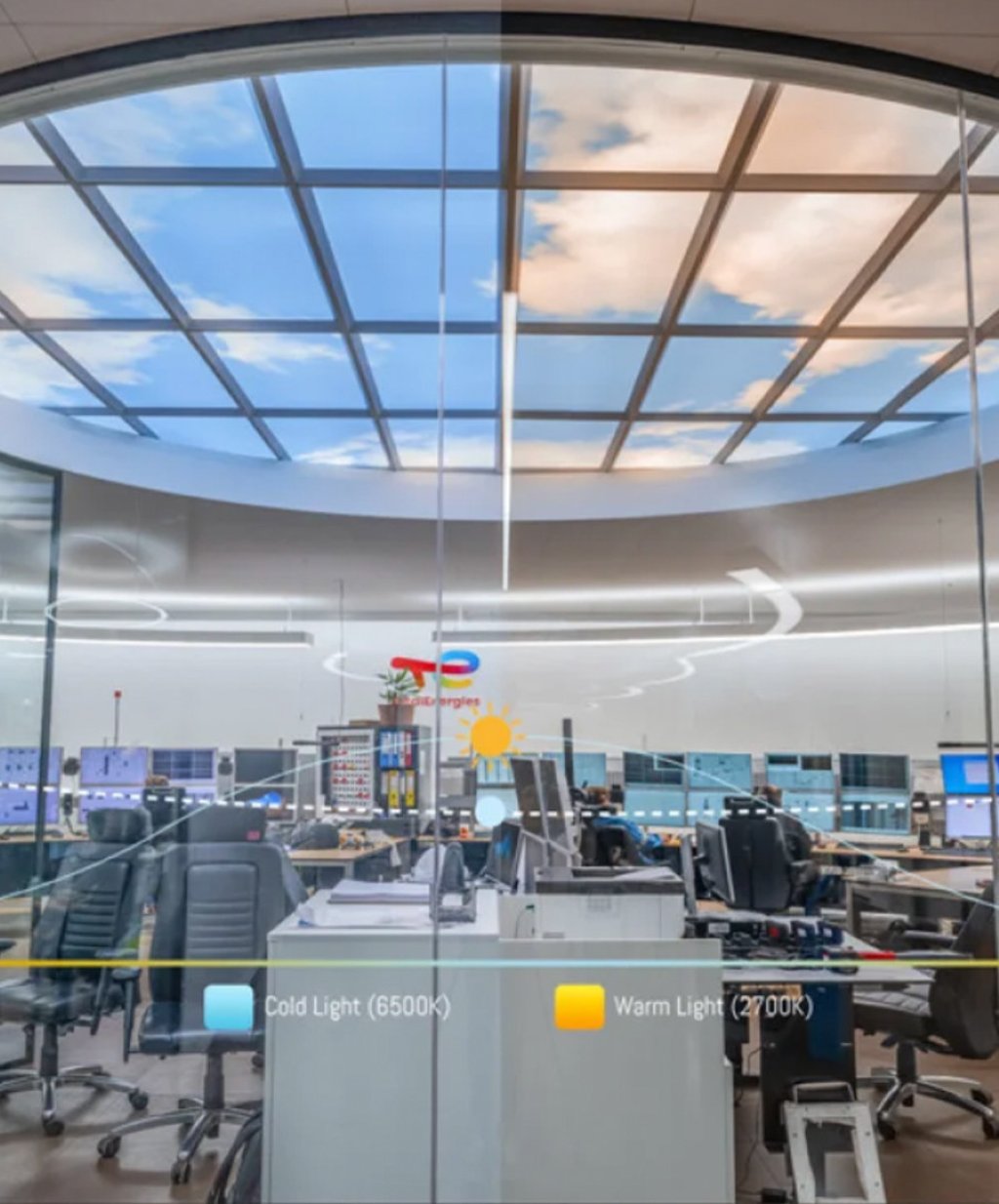
The demand for circadian lighting is growing strongly, and that has several causes. First, there is a growing awareness of employee well-being. Organizations invest more and more in ergonomic workplaces, but discover that lighting is a factor that weighs just as heavily as a good desk chair. Scientific research shows that employees who are exposed to daylight-like lighting sleep better, suffer less from fatigue and are more productive during the working day.
Second, the healthcare sector plays a major role. In hospitals, nursing homes and rehabilitation centers, patients stay for days, sometimes weeks, in rooms without access to natural daylight. The day-night rhythm is quickly disrupted, which slows recovery, harms sleep and undermines overall well-being. Circadian lighting offers a concrete intervention here that fits the principles of the healing environment: a healthcare environment that actively contributes to recovery instead of hindering it.
Finally, sustainability policy forces organizations to think about smart energy management, where circadian-controlled systems save energy by deploying light only at the right moment and the right intensity.
Light alone is sometimes not enough. The experience of a space is also determined by what people see, not only by how bright it is. This is where the combination of circadian lighting with illuminated photo panels comes in, an approach that OpenCeilings has been applying for years.
Our DynamicDaylight panels are specially developed LED panels that accurately imitate the course of daylight. They are not standard LED fixtures that emit “a bucket of light”, but balanced, flicker-free panels that automatically change light color and light intensity throughout the day.
Combined with our razor-sharp photo panels, a complete sensory experience arises: you get light that feels and progresses like outdoors. This creates a space that supports the biorhythm and at the same time offers the psychological benefits of simulated nature. Especially in windowless treatment rooms, waiting rooms or office spaces without daylight, that combination makes a noticeable difference. A biodynamic ceiling and a sky ceiling thus reinforce each other.
In waiting rooms or corridors without windows, our OpenWindows virtual windows can play a complementary role by adding the feeling of a view of the outside world. Together these solutions form a layered approach in which light, image and experience reinforce each other. We can also supply our OpenWindows application in the DynamicDaylight variant, as a biodynamic window.
Circadian lighting is applicable in virtually any environment where people stay for long periods without direct access to sufficient daylight. A few examples from practice:
In office environments it helps employees to bridge the afternoon dip and to wind down calmly at the end of the working day. In healthcare institutions such as nursing homes and hospitals it supports the sleep-wake rhythm of patients and residents. In educational institutions it contributes to concentration and alertness among pupils and students. And in the hospitality sector, think of hotel rooms or wellness spaces, it creates a luxurious, tailor-made lighting experience.
For an overview of how our solutions are used specifically in healthcare environments, see the healthcare applications of OpenCeilings.
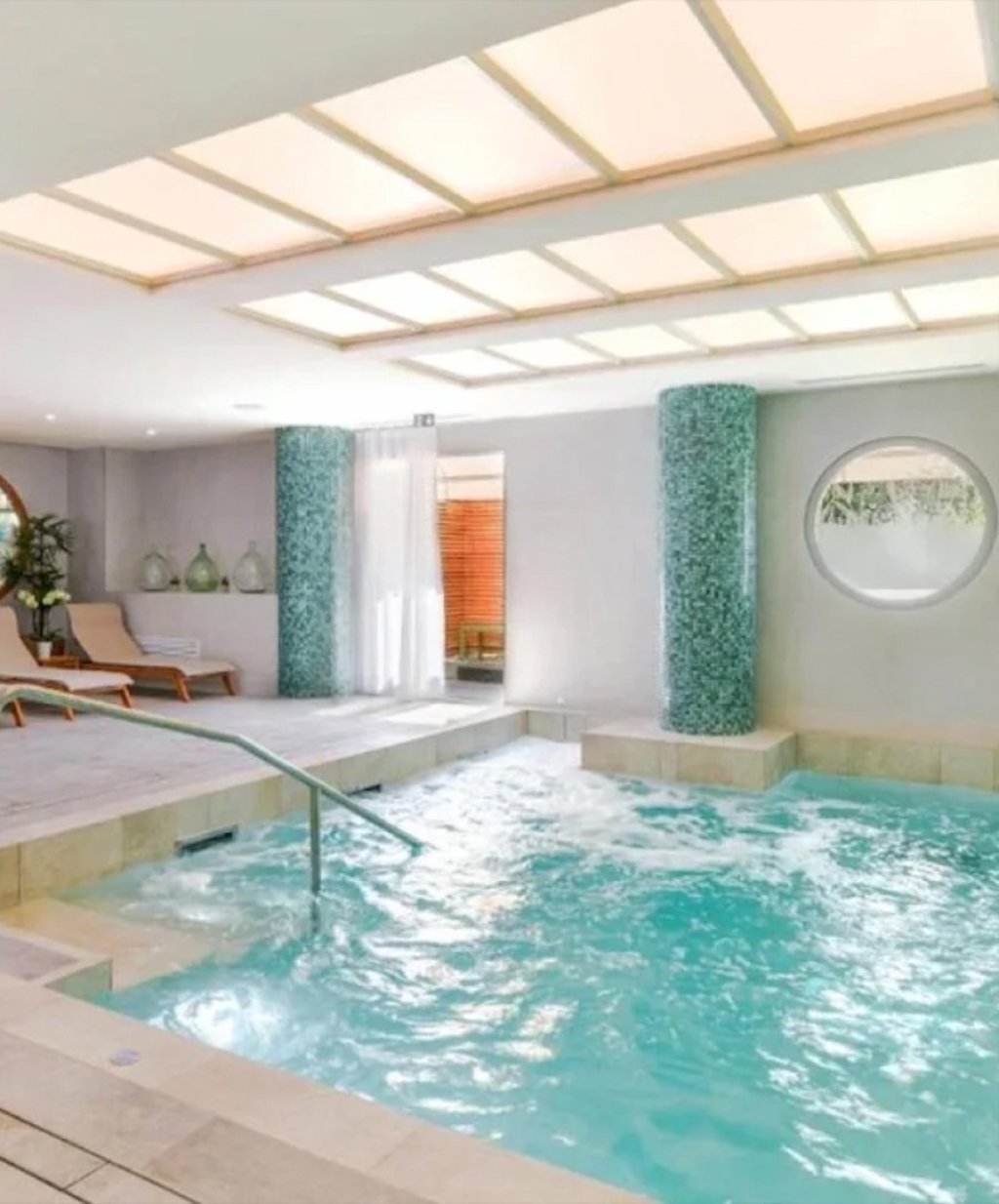
Many organizations hesitate about circadian lighting because they think it requires a complex installation or expensive changes to the existing ceiling. In practice this is not the case at all with our DynamicDaylight panels. The DynamicDaylight panels fit seamlessly in any standard suspended ceiling with 600x600 or 1200x600mm dimensions or on any wall. Installation is plug-and-play, without demolition work or lengthy closure of the room. And we program everything in advance, so that you only have to put a plug in the socket.
Maintenance is minimal: a dry cloth is sufficient in most cases. And thanks to the exceptionally long service life of the LED technology, the investment is future-proof. For organizations that have been struggling for years with the lack of daylight experience in certain rooms, this is an intervention with directly visible and tangible results.
Do you want to experience for yourself what circadian lighting does to a space? Get in touch via our contact page for no-obligation tailored advice.
Ordinary LED lighting gives a fixed light color and intensity, regardless of the time of day. Circadian lighting automatically adjusts both parameters to the daily rhythm: fresh and bluish in the morning, bright white around noon and warm and dimmed towards the evening. This matches the human biorhythm and has demonstrable effects on alertness, sleep quality and well-being.
Yes. The DynamicDaylight panels from OpenCeilings are designed to fit seamlessly in standard suspended ceilings with common dimensions, such as 600x600 and 1200x600mm. Installation is plug-and-play and requires no major renovation.
We supply the DynamicDaylight panels in both OpenCeilings and OpenWindows, depending on your space and wishes.
No, absolutely not! We take care of everything for you and deliver our applications “Plug and Play”!